Zakat is not merely a tax; it is a spiritual purification of your wealth. As the Third Pillar of Islam, it is an obligation that requires precision. However, in today’s complex financial world—filled with cryptocurrencies, stock portfolios, and retirement funds—calculating Zakat manually can be overwhelming.
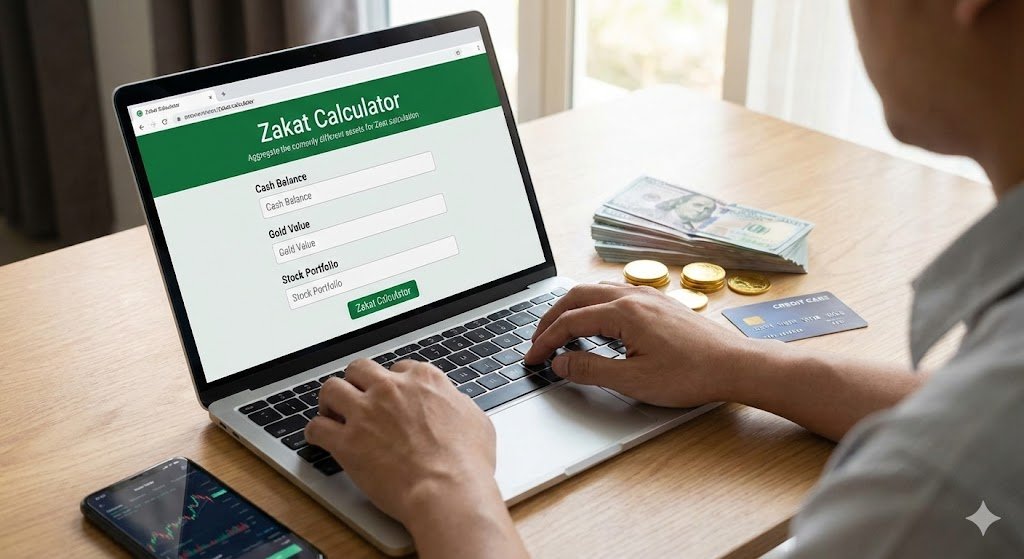
While many charities offer simple donation widgets, ZakatCalculators.com is dedicated to providing the most comprehensive, accurate, and asset-specific calculation tool on the web.
In this detailed guide, we will break down exactly how to calculate your Zakat for the year 2025/1446H, covering every asset class from traditional gold to modern digital currency.
Need an instant answer? Click Here to Use Our Advanced Zakat Calculator to get accurate results using live market rates.
What is Zakat and Why is Calculation Critical?
Linguistically, Zakat means “growth” and “purification.” Technically, it is the mandatory giving of a set proportion (2.5%) of one’s surplus wealth to those in need.
Many Muslims make the mistake of “estimating” their Zakat. However, underpaying Zakat (even by a small amount) means your obligation remains unfulfilled, while overpaying is considered voluntary charity (Sadaqah). Therefore, precision is key.
The Two Conditions: Nisaab and Hawl
Before using a calculator, you must understand the two prerequisites:
-
Nisaab (The Threshold): This is the minimum amount of wealth you must possess to be liable for Zakat.
-
Gold Standard: 87.48 grams (approx. 3 ounces).
-
Silver Standard: 612.36 grams (approx. 21.6 ounces).
-
Note: Most scholars recommend using the Silver Nisaab to determine eligibility, as it is lower and benefits more poor people.
-
-
Hawl (The Lunar Year): You must have possessed this wealth (above the Nisaab threshold) for one full lunar year (approx. 354 days).
Step-by-Step: How to Calculate Zakat on Different Assets
Our tool at ZakatCalculators.com automates this process, but understanding the logic behind the math is essential for every Muslim.
1. Zakat on Cash and Savings
This is the most straightforward category. Zakat is due on all cash balances you hold, including:
-
Cash in hand or at home.
-
Bank account balances (Current, Savings, Checking).
-
Foreign currency held (converted to your local currency value).
Common Question: Do I pay Zakat on money saved for a house or wedding?
Answer: Yes. If the money is in your possession and a lunar year has passed, Zakat is due on it, even if it is earmarked for a future expense.
2. Zakat on Gold and Silver
Gold and Silver are the original forms of currency in Islam. However, calculating this can be tricky because gold comes in different purities (Karats).
-
24k Gold: 99.9% pure.
-
22k, 21k, 18k Gold: These contain mixed metals.
How we do it better:
Unlike simple calculators that ask for total weight, ZakatCalculators.com allows you to input grams based on purity.
If you have 100g of 18k gold, you should not pay the price of 24k gold on it. Our tool automatically adjusts the value based on live market rates for the specific Karat, saving you money and ensuring accuracy.
3. Zakat on Business Assets (Trade Goods)
If you own a business, Zakat is not due on your equipment (computers, furniture, machinery, delivery trucks). These are tools of the trade.
Zakat is due on Trading Stock (Inventory).
-
Calculation: Value your current inventory at its current retail sale price (not the cost price you bought it for).
-
Add: Cash held in the business bank account.
-
Subtract: Immediate business expenses due this month.
4. Zakat on Stocks and Shares
In the modern economy, many Muslims hold wealth in the stock market. The calculation depends on your intention:
-
For Traders (Day Trading): If you buy shares to sell them for a quick profit, you pay Zakat on the entire market value of the shares.
-
For Investors (Long Term): If you hold shares for dividends and long-term growth, opinions vary,
but the majority view is that you pay Zakat only on the Zakatable assets of the company (cash + receivables + inventory).-
Rule of Thumb: Many scholars suggest taking 30-40% of the share value as the “Zakatable” portion if you cannot analyze the company’s balance sheet.
-
5. Zakat on Cryptocurrencies (Bitcoin, Ethereum, etc.)
This is a category most NGO calculators ignore. Cryptocurrency is treated as digital wealth/currency.
-
Active Trading: If you trade crypto, Zakat is due on 100% of the current market value.
-
HODLing (Long Term): Since crypto is a currency (unlike a company share), most scholars agree that Zakat is due on the full market value regardless of whether you are holding for the long term or trading.
At ZakatCalculators.com, we integrate live crypto pricing to help you get the exact value of your digital portfolio.
6. Zakat on Pension Plans (401k, RRSP)
Zakat on retirement funds is complex because you often cannot access the money without a penalty.
-
Accessible Funds: If you can withdraw the money (even with a penalty), Zakat is generally due on the total amount minus taxes and penalties.
-
Restricted Funds: Some opinions suggest Zakat is only due when you receive the payout. However, to be safe, many Muslims pay annually on the accessible portion.
Deducting Your Liabilities: What Reduces Your Zakat?
Zakat is paid on net wealth. This means you can deduct certain debts.
Deductible Debts:
-
Money you owe that must be paid immediately (e.g., this month’s rent, utility bills, credit card debt due in full).
-
Business debts payable immediately.
Non-Deductible Debts (Majority View):
-
Future interest payments.
-
Long-term loans (like a 25-year mortgage). You generally only deduct the upcoming 12 months of payments, not the entire £200,000 loan, as doing so would likely exempt a wealthy person from paying Zakat entirely.
Formula:
Why Use ZakatCalculators.com?
With so many charity websites offering calculators, why should you use ours?
-
Specialization: We are a dedicated calculation platform, not a donation funnel. Our priority is the math, not the marketing.
-
Live Market Data: We use real-time APIs for Gold, Silver, Currency, and Crypto rates. You don’t need to Google “price of gold today”; we do it for you.
-
Privacy Focused: We do not require you to enter your email or name to see your results. Your financial data stays on your browser.
-
Comprehensive Coverage: From Bitcoin to Business Inventory, we cover asset classes that traditional calculators often miss.
-
Multi-Currency Support: Whether you are in the UK (GBP), USA (USD), Pakistan (PKR), or India (INR), our tool converts Nisaab rates to your local context.
Frequently Asked Questions (FAQ)
Q: Can I pay Zakat in installments?
A: Yes, you can calculate your total Zakat for the year and pay it in monthly installments, provided the total is paid off by the end of your Zakat year.
Q: Is Zakat due on jewelry worn daily?
A: There is a difference of opinion. The Hanafi school states Zakat is due on all gold/silver jewelry, even if worn daily. Other schools (Shafi’i, Maliki, Hanbali) state no Zakat is due on permissible jewelry worn for personal use. ZakatCalculators.com allows you to choose your preference in the settings.
Q: Can I give Zakat to my family?
A: You cannot give Zakat to your direct dependents (parents, children, spouse). However, you can give it to siblings, cousins, or aunts/uncles if they meet the criteria of being poor (Fakir) or needy (Miskin).
Q: How do I calculate Zakat on rental property?
A: Zakat is not due on the value of the building itself. It is only due on the rental income you have saved from it after expenses, provided that cash has been held for a year.
Conclusion
Zakat is a beautiful obligation that circulates wealth and purifies the soul. However, the validity of this worship depends on the accuracy of your calculation. Don’t rely on rough estimates.
Use the ZakatCalculators.com tool today to ensure your calculation is precise, shari’ah-compliant, and up-to-date with 2025 market rates.