Introduction: The Evolution of Faith-Based Humanitarian Aid
The early 21st century has witnessed a paradigm shift in the global humanitarian sector, characterized by the increasing prominence and professionalization of faith-based organizations (FBOs). Within the United Kingdom, this trend is particularly visible in the Islamic charitable sector, a vibrant ecosystem of non-governmental organizations (NGOs) that mobilize the religious obligations of Zakat (mandatory almsgiving) and Sadaqah (voluntary charity) to address complex developmental challenges across the Global South. Standing at the forefront of this sector is One Ummah Charity, an award-winning relief organization that has rapidly scaled its operations to encompass nineteen crisis-stricken nations.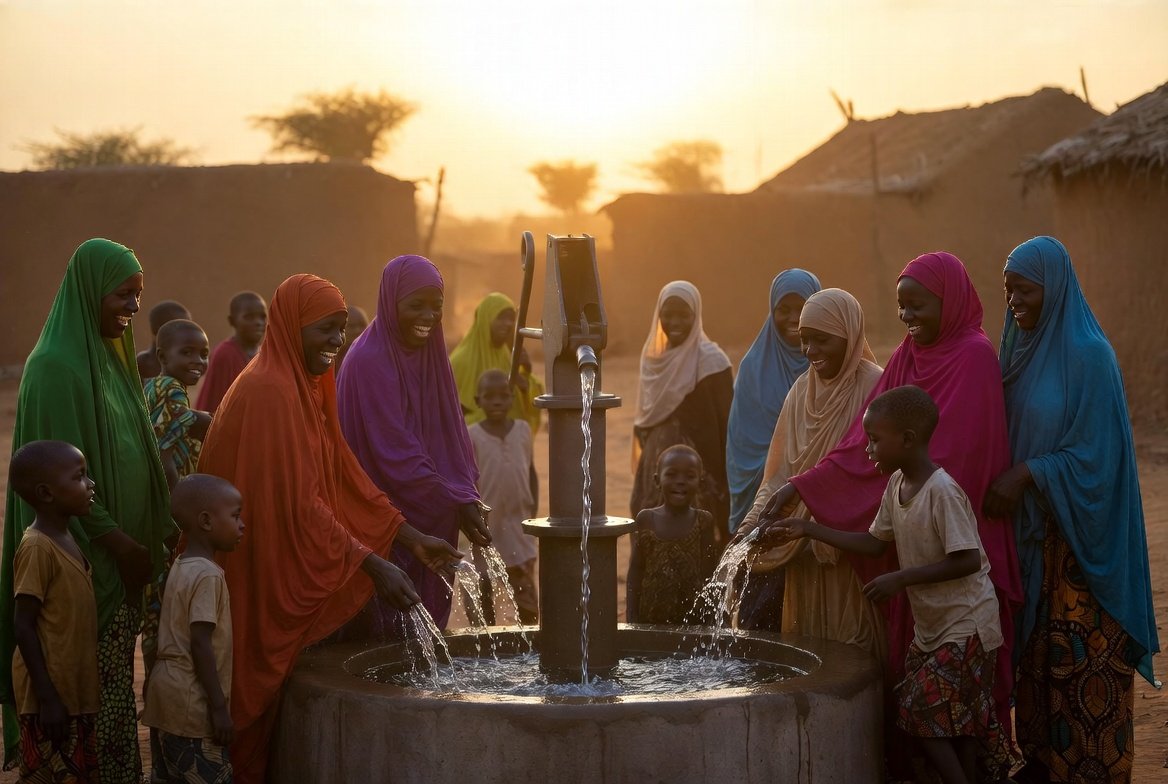
The operational mandate of One Ummah extends beyond immediate disaster relief to include long-term developmental infrastructure. While the organization engages in diverse activities ranging from orphan sponsorship to emergency medical aid, its strategic identity is heavily anchored in two critical pillars: the development of sustainable water infrastructure (water well charity) and the seasonal management of livestock sacrifice and food distribution (One Ummah Qurbani). These two service lines represent the convergence of theological imperative and logistical necessity, addressing the physiological baselines of human survival—hydration and nutrition—while simultaneously fulfilling the spiritual aspirations of a global donor base.
This report provides an exhaustive, expert-level analysis of One Ummah Charity. It dissects the organization’s unique “100% Donation Policy” financial model, evaluates the technical and social efficacy of its water sanitation projects, and scrutinizes the complex supply chains underpinning its international Qurbani operations. By synthesizing financial data, impact reports, and operational disclosures, this document aims to offer a definitive account of how Oneummah functions as a transnational humanitarian actor.
1.1 The Strategic Positioning of One Ummah
Headquartered in Middlesbrough, with significant operational nodes in Birmingham and London, One Ummah has carved out a distinct market position by appealing directly to the donor’s desire for financial efficiency and transparency. In a sector often criticized for high administrative overheads, One Ummah distinguishes itself through a rigorous commitment to a zero-deduction model for project funds. This “100% Donation Policy” is not merely a marketing tagline but a structural operational choice that dictates the organization’s internal accounting, fundraising strategies, and donor relations.
The organization’s growth trajectory has been substantial. According to filings with the Charity Commission for England and Wales (Charity Number 1168565), One Ummah Charity reported an income of £30.19 million for the financial period ending 31 March 2024. This level of revenue places it firmly among the upper echelon of British Muslim charities, granting it the fiscal capacity to execute large-scale infrastructure projects that smaller community organizations cannot attempt. The ability to mobilize over £30 million annually speaks to a highly engaged donor base and a sophisticated fundraising apparatus that leverages digital platforms, social media influencers, and community networks to drive contributions.
1.2 The Scope of Operations
The operational footprint of One Ummah is expansive, covering a “calamity belt” that stretches from West Africa to Southeast Asia. The charity lists active interventions in countries including, but not limited to, Syria, Yemen, Gaza (Palestine), Somalia, Uganda, Kenya, Niger, Pakistan, Bangladesh, and Afghanistan. These regions share common characteristics: they are often plagued by chronic political instability, climate-induced resource scarcity, and severe infrastructural deficits.
Within these challenging environments, One Ummah Charity deploys a dual-track strategy:
-
Emergency Response: Rapid deployment of food packs, medical kits, and temporary shelter in response to acute crises like the war in Gaza or floods in Pakistan.
-
Sustainable Development: The construction of permanent assets, primarily water wells and mosques, designed to provide generational benefits. This report focuses heavily on this second track, specifically the water well charity sector, as it represents the organization’s primary vehicle for long-term impact.
The synergy between these operations is critical. The emergency response builds immediate trust and access within communities, while the developmental projects like water wells ensure that One Ummah maintains a lasting presence, fostering resilience against future shocks.
2. The Financial Architecture: The “100% Donation Policy”
2.1 Defining the Zero-Overhead Model
The most debated and distinct feature of One Ummah Charity is its “100% Donation Policy.” Standard practice in the international aid sector allows NGOs to deduct a percentage of donations—typically ranging from 10% to 20%—to cover administrative costs such as staff salaries, office rent, marketing, and compliance. One Ummah, however, pledges that “every penny of your donation goes directly to those who need it most”.
This assertion raises a fundamental question of viability: How does an organization with offices in multiple UK cities and operations in 19 countries finance its existence without tapping into project funds? The answer lies in a strict segregation of financial streams, a model that requires rigorous internal accounting firewalls to prevent the co-mingling of restricted (project) and unrestricted (administrative) funds.
2.2 Administrative Revenue Streams
To sustain its operations, One Ummah has developed a diversified portfolio of non-project revenue streams. These mechanisms allow the charity to pay its bills while keeping the “100% policy” intact for the donor’s project contributions.
2.2.1 The Strategic Use of Gift Aid
The primary engine of the 100% donation model in the UK is the Gift Aid scheme. This government incentive allows registered charities to reclaim the basic rate tax paid by a donor on their contribution. Effectively, for every £1 donated by a UK taxpayer, the government adds 25p.
One Ummah utilizes this reclaimed tax specifically to fund its administration. While some charities add the Gift Aid back into the project pot, One Ummah (and several other similar entities) explicitly allocates these funds to cover overheads. This is a transparent trade-off: the donor’s original principal sum reaches the beneficiary intact, while the government’s tax rebate funds the vehicle that delivers it. This reliance on Gift Aid necessitates a donor base that is largely UK-domiciled and tax-paying, influencing the charity’s marketing focus on British Muslim communities.
2.2.2 The “Admin Fund” and Voluntary Tips
Recognizing that Gift Aid alone may not cover all costs—especially given that not all donors are eligible UK taxpayers—One Ummah Charity operates a dedicated “Admin Fund.” This is a separate donation category where supporters can knowingly contribute to the charity’s running costs. The organization frames this as a form of “Sadaqah” (voluntary charity) that facilitates all other good deeds, thereby spiritually incentivizing donors to support the backend operations.
Furthermore, the donation checkout process addresses the issue of third-party transaction fees. Credit card processors (Visa, Mastercard) and platforms (PayPal, Stripe) inevitably charge a fee per transaction (e.g., 1.4% + 20p). One Ummah cannot control these external banking costs. To resolve this, the donation interface often asks the donor to “cover the processing fee” on top of their donation. For a £10 donation, a user might pay £10.32. If the user declines, the bank deducts the fee, and the net amount goes to the project. This granularity in fee handling demonstrates the charity’s commitment to the literal interpretation of the “100% policy”.
2.2.3 Textile Recycling and Corporate Sponsorship
The charity actively diversifies its unrestricted income through commercial-style ventures. One key initiative is textile recycling. One Ummah operates clothing banks where donated textiles are collected. Instead of shipping these clothes abroad (which can be logistically inefficient), the textiles are often sold to recycling firms, generating cash revenue. This revenue is unrestricted and fully allocated to the administrative budget.
Additionally, the charity pursues “strategic partnerships” and sponsorships with businesses. These corporate sponsors provide capital injections in exchange for exposure or Corporate Social Responsibility (CSR) fulfillment. These B2B (business-to-business) revenues are crucial for funding marketing campaigns without dipping into individual donor funds.
2.3 Financial Transparency and Governance
The credibility of the 100% donation model rests entirely on trust. Critics of the model often argue that it can lead to “under-investment” in organizational capacity, as charities might struggle to raise enough “admin-specific” funds to hire top-tier staff or implement robust monitoring systems. However, One Ummah‘s financial filings suggest a robust operation.
With an income of over £30 million, the organization has significant resources. The 2024 annual return indicates that the charity is maintaining its reporting obligations to the Charity Commission, with the latest accounts received on 30 January 2025. This regulatory compliance is the baseline for transparency. Furthermore, independent reviews on platforms like Trustpilot (where it holds a 4.6/5 rating) and Charity Navigator (where the affiliated US foundation holds a 3-star rating) reinforce the public perception of reliability.
Table 1: One Ummah Financial Model Overview
| Revenue Stream | Allocation | Mechanism |
| Project Donations | 100% to Beneficiaries | Restricted funds used strictly for designated appeals (e.g., Water, Qurbani). |
| Gift Aid | Administration | 25% tax reclaim from UK government used to pay staff, rent, and bills. |
| Admin Fund | Administration | Direct donations from supporters specifically for overheads. |
| Recycling Income | Administration | Revenue generated from the sale/processing of donated textiles. |
| Corporate Sponsorship | Administration | Funds from business partners supporting the charity’s infrastructure. |
3. The Global Water Crisis: Contextualizing the Intervention
To understand the value proposition of One Ummah’s water well charity, one must first understand the scale of the crisis it attempts to mitigate. Water scarcity is not merely an inconvenience; it is a structural barrier to human development that perpetuates the cycle of poverty in the regions where One Ummah operates.
3.1 The Pathology of Water Scarcity
According to One Ummah‘s campaign literature, backed by global statistics, over 2 billion people worldwide lack access to safe, clean drinking water. This scarcity manifests in three deadly dimensions:
-
Pathogenic Load: In the absence of deep wells, communities resort to surface water—rivers, ponds, and open holes. These sources are frequently contaminated with fecal matter, agricultural runoff, and industrial pollutants. The result is a high prevalence of waterborne diseases such as cholera, typhoid, dysentery, and parasitic worms. One Ummah notes that infections from unclean births alone cause more than 1 million deaths annually, a statistic directly linked to the lack of sterile water in homes and clinics.
-
The Gendered Burden: In rural Sub-Saharan Africa and South Asia, the burden of water collection falls disproportionately on women and girls. It is common for them to walk multiple miles daily, carrying 20-liter jerry cans (weighing 20kg) on their heads. This “time poverty” prevents women from engaging in economic activity and keeps girls out of school. An intervention by Oneummah to build a well in a village is, therefore, also an educational and economic intervention.
-
Chemical Contamination: In regions like Bangladesh and parts of Pakistan, the crisis is not just biological but chemical. Shallow groundwater is often contaminated with naturally occurring arsenic. Consuming this water leads to arsenicosis, a painful and often fatal condition. One Ummah’s water projects in these regions must account for this by digging significantly deeper to bypass contaminated aquifers.
3.2 The Impact of Clean Water
The charity frames its water projects as “The Best Charity,” referencing Islamic prophetic tradition. The impact of a single well is transformative. One Ummah reports that providing a sustainable water source leads to immediate health improvements, as the transmission vectors for cholera and diarrhea are severed. Beyond health, the social fabric of the village changes. “Villages where children once spent their days walking for water now have schools filled with smiling students,” the charity reports.
In 2023 alone, One Ummah claimed to have provided clean water to over 2.2 million people through the development of 469 water access points. This included 167 bore wells, 25 deep well tubes, and 237 hand pumps. These numbers represent a significant infrastructural contribution to the communities served.
4. One Ummah’s Water Well Charity: Technical and Operational Analysis
One Ummah offers a standardized menu of water solutions, allowing donors to purchase specific types of infrastructure based on their budget and the needs of the target region. This productization of aid simplifies the donation process while masking a complex backend engineering challenge.
4.1 Tiered Water Solutions
The charity currently markets three primary tiers of water infrastructure, each designed for a different hydro-geological context.
4.1.1 The Hand Pump (Shallow Well)
-
Cost: £250
-
Target: Small families or micro-communities.
-
Technical Specs: These are manually operated leverage pumps (often the “India Mark II” or similar robust designs) installed on tube wells.
-
Context: Suitable for regions with high water tables and soft soil, such as parts of Pakistan, India, and Bangladesh.
-
Impact: A cost-effective solution that provides immediate access to groundwater, removing the need to use surface ponds. However, they are vulnerable to seasonal drying if the water table drops.
4.1.2 The Borehole Well (Deep Well)
-
Cost: £1,350 (Single) / £2,700 (Double)
-
Target: Entire villages or large communities (up to 1,000 people).
-
Technical Specs: These wells are drilled by machine to significant depths (often 50-100 meters or more) to access deep aquifers that are free from surface contamination and less likely to dry up during droughts.
-
Context: Essential for arid regions in Africa (Somalia, Niger, Kenya) where the water table is deep and the ground is rocky.
-
Impact: These are high-impact assets. The water quality is superior, and the yield is sufficient to support livestock and small-scale agriculture alongside human consumption. The higher cost reflects the need for heavy drilling machinery and more expensive casing materials.
4.1.3 Emergency Desalination and Trucking
In conflict zones like Gaza, digging wells is often impossible due to the destruction of infrastructure, blockade restrictions, or the salinity of the coastal aquifer. Here, One Ummah pivots to emergency solutions: desalination plants and water trucking. While not “wells” in the traditional sense, these are vital lifelines. The charity reports installing rapid-response emergency desalination projects to ensure millions have access to safe drinking water in these high-stress environments.
4.2 Regional Implementation Strategy
The choice of technology is strictly dictated by geography. One Ummah operates in diverse terrains, and its deployment strategy reflects this:
-
Sub-Saharan Africa: The focus is on deep boreholes. In countries like Kenya, Uganda, and Somalia, the charity constructs durable wells that can withstand the harsh dry seasons. The “Water Appeal” emphasizes the severe treks women undertake here, positioning the borehole as a liberation from this drudgery.
-
South Asia: In Pakistan and Bangladesh, the focus is often on tube wells and hand pumps. However, in arsenic-affected zones, deep tube wells are deployed. The charity explicitly mentions the arsenic crisis in Bangladesh as a driver for its specific technical interventions there.
-
Middle East: In Yemen and Syria, the water crisis is often infrastructural—pumps destroyed by war or lack of fuel. One Ummah’s interventions here likely involve rehabilitating existing networks or providing solar-powered pumping solutions to bypass the fuel crisis, alongside water trucking.
4.3 Sustainability and Maintenance
A critical critique of water charity is the “install and ignore” phenomenon, where wells break down after a few years. One Ummah addresses this through the concept of Sadaqah Jariyah (continuous charity). The theological promise is that the donor receives rewards as long as the well functions. This creates a spiritual liability for the charity to ensure longevity.
While the provided research does not detail a specific “endowment fund” for maintenance, standard practice for reliable charities in this sector (which One Ummah aligns with via its “awards” and ratings) involves:
-
Community Ownership: Establishing a local water committee responsible for the well.
-
Training: Teaching locals to perform minor repairs (washer replacement, greasing).
-
Siting: Conducting hydro-geological surveys (taking 4-12 months) to ensure the well is dug in a viable location that won’t run dry.
The charity mentions that a borehole well serves a village of up to 1,000 people and is intended to function for many years, acting as a “Sadaqah Jariyah” for the donor. This implies a design life of at least a decade, provided maintenance is upheld.
5. The Theology and Logistics of One Ummah Qurbani
The second major pillar of One Ummah’s annual cycle is the Qurbani (or Udhiyah) campaign. This service is distinct from water projects as it is time-bound, religiously mandated, and involves a complex cold-chain logistics operation.
5.1 The Religious Imperative
Qurbani refers to the sacrifice of a livestock animal (sheep, goat, cow, or camel) performed during the days of Eid al-Adha (10th to 12th Dhul Hijjah). It commemorates the Prophet Ibrahim’s willingness to sacrifice his son Ismail for the sake of God. For Muslims who meet a certain wealth threshold (Nisab), performing Qurbani is an obligation (Wajib or highly stressed Sunnah).
Traditionally, a Muslim would slaughter the animal themselves and distribute the meat. However, in a globalized world, diaspora Muslims in the UK commission charities like One Ummah to perform the sacrifice on their behalf in poorer nations. The charity acts as a Wakil (agent), ensuring the sacrifice is performed according to Halal rites and that the meat reaches the destitute.
5.2 The 2025 Qurbani Campaign Structure
For the 2025 season, One Ummah has organized its Qurbani operations to cover 17 to 19 countries. The logistics of this are immense. The charity must procure thousands of animals, ensure they are healthy and of the correct age, slaughter them within a 72-hour window, and distribute the fresh meat to hundreds of thousands of beneficiaries before it spoils.
To manage the varying costs of livestock around the world, One Ummah utilizes a “Price Banding” system. This allows donors to select a region based on their budget or emotional connection.
5.2.1 The 2025 Price Bands
The pricing structure for One Ummah Qurbani reveals the economic disparities of the regions they serve:
-
Band A (£25) – India: This is the most affordable option. The low cost is due to the availability of large animals (buffalo/bulls) where a single animal has seven “shares.” A donor pays £25 for one-seventh of a large animal. This low entry point ensures that even donors with limited means can fulfill their religious obligation.
-
Band B (£70) – Africa & Central Asia: This band covers the majority of One Ummah’s operational theater, including Uganda, Sudan, Somalia, Afghanistan, Niger, Kenya, Sierra Leone, Malawi, Pakistan, and Tanzania. The £70 price typically represents the cost of a whole small animal (sheep/goat) or a share in a more expensive region. This band targets the core of the global extreme poverty belt.
-
Band C (£130) – Crisis Zones: This band includes Bangladesh, Burma (Rohingya refugees), Yemen, Syria, and Mauritania. The higher cost reflects two factors: the difficulty of logistics in conflict zones (Yemen, Syria) and the specific market prices in regions like Bangladesh. Providing meat to Rohingya refugees or besieged Syrians requires navigating military checkpoints and broken supply chains, driving up the cost.
-
Band D (£225) – Lebanon: The highest price point is reserved for Lebanon. Following the country’s total economic collapse and hyperinflation, the cost of imported livestock has skyrocketed. Aid here is critical as the formerly middle-class population has plunged into poverty, yet the operational costs remain high
Table 2: One Ummah Qurbani 2025 Pricing Matrix
| Band | Price | Key Locations | Donor Option |
| Band A | £25 | India | 1/7th Share (Large Animal) |
| Band B | £70 | Uganda, Somalia, Pakistan, Afghanistan, Sudan | Small Animal / Share |
| Band C | £130 | Yemen, Syria, Bangladesh (Rohingya) | Small Animal / Share |
| Band D | £225 | Lebanon | Small Animal / Share |
5.3 Supply Chain and “Local Purchase” Strategy
One Ummah emphasizes a “local purchase” strategy. Rather than shipping frozen meat from Europe or Australia, the charity procures animals locally within the beneficiary countries. This has a dual economic benefit:
-
Direct Aid: The meat feeds the hungry.
-
Economic Stimulus: The purchase of thousands of heads of livestock injects massive capital into the local agrarian economy, supporting farmers and herders in places like Somalia and Pakistan.
However, the charity includes a prudent disclaimer: “If for reasons out of our control, we are unable to fulfil the qurbani sacrifice in your chosen country, we will carry it out in an alternative country”. This clause is vital for operations in volatile zones like Gaza or Syria, where a sudden border closure or airstrike could make slaughter impossible on the designated days. It ensures the donor’s religious obligation is legally discharged even if the logistics shift.
6. Beneficiary Impact: Beyond the Statistics
While the financial and technical details define the means, the ends of One Ummah Charity’s work are human stories of relief and dignity.
6.1 Water: Restoring Health and Education
The impact of a One Ummah water well is best understood through the lens of those it serves. In the arid villages of Niger or the drought-stricken plains of Somalia, the arrival of a borehole changes the daily rhythm of life.
-
Health: The charity reports that in their project areas, the incidence of waterborne disease drops significantly. Families no longer drink from the same water holes used by livestock.
-
Education: With a well in the village, children—specifically girls—are released from the hours-long chore of water fetching. One Ummah explicitly links their water projects to educational outcomes, noting that schools fill up when water is available.
-
Dignity: Access to clean water allows for basic hygiene (Wudu/ablution for prayer, bathing), restoring a sense of personal dignity to communities living in degradation.
6.2 Qurbani: Nutritional Relief in Conflict
For beneficiaries in Yemen or Syrian refugee camps, One Ummah Qurbani meat is often the only high-quality protein they will consume for months. In 2024 alone, the charity fed 123,663 people through this program. Families often preserve this meat—salting, drying, or curing it—to make it last for weeks. In regions of famine, like parts of Sudan and Yemen, this caloric injection is a lifeline against malnutrition. The psychological impact of celebrating Eid with meat, just like the rest of the Muslim world, fosters a sense of belonging to the global “One Ummah,” countering the isolation of poverty.
7. Operational Challenges and Risk Management
Managing aid across 19 countries involves significant risk. One Ummah faces logistical, security, and reputational challenges.
7.1 Security and Access
Operating in Syria, Yemen, and Afghanistan requires navigating complex security environments. One Ummah likely relies on a network of trusted local partners on the ground to deliver aid where international staff cannot go. This “remote management” style is standard for the sector but carries risks of aid diversion. The charity’s continued presence and successful reporting suggest they have established robust vetting mechanisms for these local partners.
7.2 Inflation and Pricing
The Qurbani pricing bands are set in advance, but global livestock prices fluctuate. If inflation spikes in Sudan or Pakistan just before Eid, the charity risks a funding shortfall. The operational margin provided by the “Admin Fund” and the flexibility to move quotas between countries (as per the disclaimer) helps mitigate this financial risk.
7.3 Climate Change Adaptation
As the water crisis deepens due to climate change, shallow wells (hand pumps) are increasingly at risk of drying up. One Ummah‘s shift towards offering deep boreholes (£1,350) indicates an adaptation to this reality. Ensuring that these wells are dug deep enough to withstand future droughts is a technical challenge that requires high-quality hydro-geological surveying.
8. Conclusion: The One Ummah Proposition
One Ummah Charity represents a highly effective evolution of the British Muslim humanitarian sector. By professionalizing the delivery of aid while adhering to strict religious and financial principles, it has built a trusted bridge between the UK donor and the global beneficiary.
The organization’s “100% Donation Policy” remains its most potent unique selling proposition (USP). By aggressively leveraging Gift Aid and separate admin fundraising, One Ummah has proven that a zero-deduction model can be scalable to the tune of £30 million annually. This model appeals deeply to donors who want to maximize the spiritual and material impact of their contributions.
In its Water Well Charity operations, One Ummah acts as an infrastructure developer, converting donations into permanent assets that alter the socio-economic trajectory of villages in Africa and Asia. Through One Ummah Qurbani, it functions as a global logistics manager, ensuring that the religious rites of the UK diaspora translate into nutritional security for the world’s most vulnerable.
For the donor, Oneummah offers a transparent, religiously compliant, and high-impact vehicle for philanthropy. For the sector, it sets a competitive benchmark for how faith-based organizations can leverage specific financial models (like Gift Aid) to drive massive operational scale without compromising on the promise of 100% aid delivery. As climate change and geopolitical instability continue to drive the need for water and food security, One Ummah Charity’s role as a key node in the global humanitarian network appears set to expand further.
Appendix: Key Operational Metrics
| Metric | Data Point | Source |
| Total Income (2024) | £30.19 Million | 5 |
| Total Expenditure (2024) | £27.20 Million | 5 |
| Beneficiaries (Annual) | > 6 Million | 2 |
| Water Beneficiaries (2023) | 2.2 Million | 15 |
| Qurbani Beneficiaries (2024) | 123,663 | 16 |
| Countries of Operation | 19-20 | 1 |
| Trustpilot Rating | 4.6 / 5 | 17 |
| Charity Commission Status | Up to date (Jan 2025) | 11 |